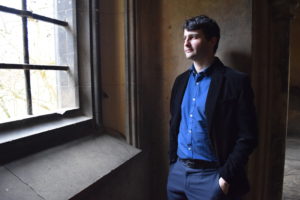
Kiryl Keduk: From Belarus to Burdon Road – Tuesday, 6th March 2012

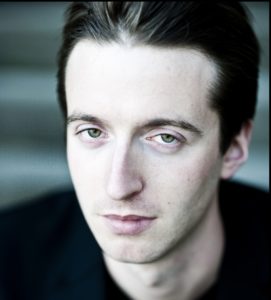
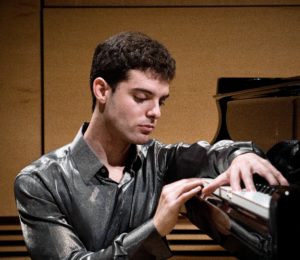
Kiryl KedukKiryl Keduk was born in Grodno in Belarus in 1987 and made his public debut with the National Philharmonic Orchestra of Belarus at the age of ten. From 2001 he was a pupil of Waldemar Wojtal at the Music Academy at Gdasnk and since 2007 he has studied under Boris Petrushansky at the Accademia Pianistica Incontri Col Maestro at Imola in Italy. Kiryl was the winner of the James Mottram International Piano Competition at the Royal Northern College of Music in 2010, with an outstanding performance of Chopin’s First Piano Concerto with the Royal Liverpool Philharmonic Orchestra under Owain Arwel Hughes.

Kiryl has won numerous awards. In 2004 he was a prizewinner in the Arthur Rubinstein Competition in Bydgoszcz in Poland, subsequently winning first prizes in national and international piano competitions in Minsk, Bucharest, Antonin, Danzig, Varna and in Marsala. He has also been a prizewinner at the Vladimir Horowitz International Piano Competition in Kiev.  Already Kiryl’s international career has taken off brilliantly and he has played as soloist with orchestras in Florence, at the Teatro Politeama Garibaldi in Palermo, the Sala Verdi in Milan, with the Nice Philharmonic Orchestra at the Opéra de Nice, also in Israel and at the Steinway Hall in New York. He has played in the Mozarteum in Salzburg, at the National Philharmonic Halls in Kiev and Warsaw and in the Philharmonic Hall in Krakow, among many other venues.

Date:- Tuesday, 6th. March ,2012 Time: – 7.15p.m.
Venue:- Sunderland Pottery Room(Ground floor) Museum & Winter Gardens, Burdon Road, Sunderland.
Tickets: at the door £11 (Students /OB40’s £5) No other concessions.
Accompanied Children (up to 16 years) come free (with teachers or parents)

Posted in Recitals, Uncategorized | Tagged | Leave a comment

Christopher Guild: Another fine export from Scotland

Christopher GuildScotland is well-known for its export of Doctors, Dentists, Engineers, Soldiers and many other things that could fill paragraphs.

It is not so well-known (south of the border) that it also has a high reputation in the world of serious music, with outstanding music schools, Conservatoires and University Departments producing world-class talent of all musical types.

Such a brilliant young Scot is pianist Christopher Guild who is to give the next recital at Sunderland Piano Society. He has won competitions, and prizes, already has two degrees (from the RCM, London) and is working on an advanced Diploma.

He will give a varied programme of music by Beethoven, Liszt, Debussy, Scriabin and Respighi. A lively mixture of the familiar and unfamiliar. Something for every music lover to enjoy.

Christopher Guild
(Sponsored by the Countess of Munster Musical Trust)
Date: Tuesday, 7th. February, 2012
Time: 7.15p.m.
Venue: Sunderland Pottery Room (Ground floor)
Museum & Winter Gardens, Burdon Road, Sunderland.
Tickets: at the door £11 (Students /OB40’s £5) No other concessions.
Accompanied Children (up to 16 years) come free (with teachers or parents)

Christopher’s complete programme is as follows:

  • Beethoven (Sonata Op. 13 “Pathetique”)
  • Respighi (Tre preludi sopra melodie gregoriane)
  • Liszt (paraphrase on “Gounod’s Faust”)
  • Debussy (“Children’s Corner” Suite)
  • Scriabin (Sonata No. 3 Op.23)

As a special treat for those unfamiliar with Ottorino Respighi’s “Tre preludi sopra melodie gregoriane” a video playlist as performed by Konstantin Scherbakov is featured below.

Posted in Press | Leave a comment

Antony Peebles : Review of concert Tuesday 6th December 2011

Sunderland Pianoforte Society continued its 2011-2012 season on Tuesday 6th. December 2011 by celebrating the 200th. anniversary of the birth of the great Hungarian Pianist/Composer Franz(Ferenc) Liszt. The Society had decided that this was an opportunity to invite back Antony Peebles for this celebration. He last played for the Society in 1972 and since then has played in 131 different countries around the world and has become a specialist in, and advocate of, the work of Liszt.

Antony also acknowledges the problems being faced by small classical music societies across the whole of England, and sympathises with them to the extent that he offers his services at a much-reduced fee for small groups such as Sunderland. This presents a wonderful opportunity to obtain the highly experienced and much praised work of one of England’s foremost soloists who has held himself at the highest level in both solo recital and concerto work throughout one of the longest careers on the classical music scene.

Needless to say, Antony did not disappoint, talking to his audience before every piece, he opened his programme with two of Liszt’s many piano transcriptions: Schubert’s songs “Litany” and “Hark!Hark! The Lark”. This second was a special favourite in early Victorian Britain, when he visited the country, coming to the North East by way of Scotland. Antony Peebles has a specially personal way of bringing Liszt’s brilliance to the fore in these ever-creative and intensely clever transcriptions. He makes it clear that these are not mere “arrangements”, they are re-creations of Schubert’s work in Liszt’s own inimitable style, and highly satisfying as solo piano pieces in their own right.

Then came the major work that completed part 1 of this grand recital: the fabulous Sonata in B minor; surely one of the greatest works ever created for the piano keyboard.
Breaking new ground in almost every bar, this huge one-movement work (almost half-an-hour long) grew magnificently under the brilliantly controlled fingers of Antony Peebles. We have heard this sonata at Sunderland many times over the years played by some of the world’s finest pianists. It always remains a fresh mystery of creation, and no more so than in this performance. Antony made the sonata’s architecture grow before our very eyes without pressure or stress of any kind. This is a fiendishly difficult work demanding every piano technique (as you might expect from Liszt!) but it is also especially challenging for the soloist to make an integrated “performance” of such a mammoth piece. This Antony Peebles did quite magnificently. He even talked to the audience in his introduction about Liszt’s very original use of his basic materials, demonstrating at the piano how they were completely transformed throughout the work into what appeared to be new melodies as the work built and progressed through its various moods. It takes someone of great knowledge and experience to make abstract musical ideas, as complex as these, so clear. The whole performance was a marvel that had the appreciative audience on the edge of their seats with tension and excitement.

The second half was filled by another transcription – this time of a great piece of orchestral music by Wagner (Liszt’s son-in-law) and two original pieces for solo piano.
The Wagner transcription is rarely heard probably because it is so difficult to “bring off”
as Liszt transcribes pure orchestral sound into terms the keyboard (and ten fingers!)can cope with. This amazing piece transcribed the “Liebestod” which forms the actual conclusion of Act III of Wagner’s opera “Tristan und Isolde”. It is a “tall order” to expect to transform this huge vocal and orchestral score into terms that a mere ten fingers on two hands can express satisfactorily. Again, amazingly done so well and so sympathetically by Antony. He really enjoyed losing himself in the beauties of Sunderland’s glorious Steinway concert grand. He said afterwards that he was really taken with the instrument and he showed great interest in the fascinating historical story of this unique piano.

The two original pieces by Liszt were the “Bénédiction de Dieu dans la solitude” and the ever-so-famous “Hungarian Rhapsodxy No.2” . The first of these was the third of a set of pieces that (in fact) were Liszt’s own favourites that he published in 1853 under the title “Harmonies poétiques et religieuses”. This is by far the longest of the whole group and offers great challenges to the interpretational aspects to the soloist. Of course, as in all of Liszt’s works, there are plenty of challenges to sheer finger techniques. Antony took all of this in his stride and presented a wonderfully polished and moving
version of the piece.

Clearly Antony chose the “Hungarian Rhapsody No.2” not only because of its familiarity but because it offers a lighter yet completely stimulating finale for any concert.
It is, of course, full of marvellous tunes and piano virtuoso technique and Antony’s performance brought all the rhythmic aspects of Liszt’s passionate “Hungarianisms” well to the fore. The Sunderland audience simply loved the excitement of it all. Their enthusiastic and generous applause made up for the small number in the room. Antony
responded with a lovely Brahms encore: the Waltz in A flat from Op.35.

The Sunderland audience had enjoyed a wonderful series of presentations from an “elder statesman” of British pianism who is renowned across the globe for his Liszt interpretations. This really was a fine tribute to commemorate the 200th. anniversary of
that great composer’s birth.
Laurie Giles.

Posted in Recitals, Review | Tagged , , , , | Leave a comment

Antony Peebles: Leads the celebration of Liszt’s 200th Birthday – Tuesday 6th December 2011

For the very special occasion of the 200th. anniversary of the birth of the great Hungarian Pianist/Teacher/Composer Franz Liszt Sunderland Piano Society has managed to book the distinguished “elder statesman” of the world of English Classical Piano: Antony Peebles.

He last played in Sunderland in 1972 when he was a brilliant young star of the keyboard. Since then he has enjoyed a vastly successful career playing in 131 different countries around the whole world, and he has become a world-renowned specialist in the music of Liszt. He is coming to Sunderland to play an exciting programme entirely devoted to that composer’s music, and he is looking forward to playing Sunderland’s famous Steinway Concert Grand Piano that is unique in all of Europe. This is an important music event not to be missed!

Date: Tuesday 6th December 2011
Time: 7.15p.m.
Venue: Sunderland Pottery Room(Ground floor)
Museum & Winter Gardens, Burdon Road, Sunderland.
Tickets: at the door £11 (Students /OB40’s £5) No other concessions.
Accompanied Children (up to 16 years) come free (with teachers or parents)

………and those 131 Countries

1 Afghanistan 5/77; 2/79; 3/04; 4/06;
2 Algeria 9/91; 4/93;
3 Angola 5/80; 9/89; 3/00;
4 Anguilla 4/95; 12/09
5 Antigua 4/95;
6 Argentina 5/98;
7 Armenia 12/06;
8 Australia 6-7/77; 3/79; 3-4/82; 5/85; 3-4/88; 4-5/91; 2-3/94; 6-7/97; 3-4/99; 4/01; 3/03; 11/03; 4/05; 2-3/06; 2/07; 2/08; 2-3/09; 3/10;
9 Austria 2/82;
10 Azerbaijan 6/96; 9/97;
11 Bahamas 4/81; 1/87; 4/95; 10/99;
12 Bahrain 4/79; 5/82; 5/83; 11/83; 4/86; 3/87; 2/88; 2/89; 2/90; 6/91; 10/92; 4/94; 11/94; 2/95; 11/95; 6/96; 2/97; 6/97; 2/98; 0/99; 2/01; 1/02; 3/03; 2/04; 5/05; 5/07; 2/09;
13 Bangladesh 8/77; 2/79; 2/82; 4/82; 11/83; 10/95; 4/09;
14 Barbados 4/81; 8/87; 3/92;
15 Belgium 5/77;
16 Belize 9/87; 9/89; 3/92; 4/95; 11/02; 10/03;
17 Bermuda 6/74; 10/75;
18 Bolivia 4/81; 8/84; 9/89; 3/92; 5/95; 5/98; 10/01; 7/05; 10/07;
19 Botswana 3/78; 4/80; 2/94; 5/96; 10/99; 5/09;
20 Brazil 5/98;
21 British Virgin Islands 5/98; 11/00;
22 Brunei 6/77; 4/79; 4/82; 3/86; 1/89; 6/91; 2/97; 2/01; 3/05;
23 Burma 2/79; 2/82; 4/86; 10/95; 2/97; 1/02;
24 Cameroon 5/80; 4/92; 2/05;
25 Canada 3/84; 10/02;
26 Cayman Islands 9/84; 9/87; 5/98;
27 Chile 11/02;
28 China 2/00;
29 Colombia 3/81; 9/84; 9/87; 9/89; 3/92; 5/98; 11/07; 12/09;
30 Congo (Rep) 4/90;
31 Congo (former Zaire) 3/78; 5/80; 4/83; 11/86; 9/89; 5/09;
32 Costa Rica 9/85; 9/87;
33 Cuba 9/85; 9/87; 11/07;
34 Cyprus (Greek) 9/75;4/77; 5/79; 3/80; 12/83; 3/87; 2/90;
35 Cyprus (Turkish) 4/77; 5/79; 3/80; 3/87;
36 Denmark 11/94;
37 Ecuador 4/81; 3/92; 4/95; 10/00; 10/03; 6/05; 11/07; 12/09;
38 Egypt 3/87;
39 Eire 10/74; 3/76;
40 El Salvador 5/98; 11/02;
41 Ethiopia 2/87; 3/90; 6/96; 3/02; 2/04;
42 France 6/72; 6/81;
43 Gabon 5/80; 4/83; 11/86; 9/89; 4/90;
44 The Gambia 6/80; 4/83; 11/86; 4/90; 4/96;
45 Georgia 6/96; 12/06;
46 Germany 4/78;
47 Ghana 3/78; 5/80; 5/05;
48 Greece 4/78; 3/80; 2/82; 12/83; 5/94; 5/96;
49 Guatemala 4/95; 11/00; 11/02; 6/05; 11/07;
50 Guyana 4/95;
51 Holland 6/89;
52 Honduras 9/87; 11/02; 10/03;
53 Hong Kong 10/74; 4/79; 10/82; 3/99; 2/00; 2/02; 3/06;
54 India 5/77; 8/77; 2/79; 4/79; 5/82; 11/83; 4/86; 2/90; 10/92; 3/93; 12/04; 3/05; 12/06;
55 Indonesia 6/77; 3/82; 5/85; 3/86; 5/88; 4/94; 3/10;
56 Iran 9/75; 5/77; 12/92;
57 Iraq 4/77; 5/82; 3/87; 2/88; 2/90; 3/04;
58 Italy 5/82; 12/83;
59 Ivory Coast 6/80; 4/96; 12/99;
60 Jamaica 4/81; 9/87; 9/89; 3/92; 4/95; 5/98; 11/00; 10/03;
61 Japan 11/03;
62 Jordan 9/75; 3/77; 1/79; 2/88; 6/91; 3/06;
63 Kenya 4/78; 4/80; 2/87; 3/90; 6/96; 9/99; 3/02; 2/04; 6/06; 5/09;
64 Korea 4/82; 4/85; 2/89; 2/97;
65 Kuwait 9/75; 4/77; 4/79; 5/82; 3/87; 9/97; 2/00; 2/04; 5/05; 5/07;
66 Lebanon 5/79; 3/80; 5/82; 11/83; 6/91;
67 Libya 12/06; 1/09; 1/10;
68 Macau 10/74;
69 Malawi 3/78; 4/80; 4/83; 2/87; 3/90; 6/96; 3/02; 1/04; 6/06;
70 Malaysia (West) 5/77; 3/79; 4/82; 3/86; 6/97; 7/97; 2/98; 4/99; 3/00; 3/01; 2/02;
71 Malta 3/77; 6/02;
72 Mauritius 6/72; 5/80; 4/90; 5/01; 2/04;
73 Mexico 3/81; 3/83; 11/00; 11/02;
74 Morocco 6/80; 11/86;
75 Mozambique 5/96; 10/99;
76 Namibia 2/94;
77 Nepal 8/77; 2/79; 4/86; 10/95; 5/05;
78 New Zealand 7/77; 3/79; 3/82; 5/85; 4/88; 4/91; 3/94; 7/97; 4/99; 4/01; 3/03; 11/03; 4/05; 2/06; 3/07; 3/09; 3/10;
79 Nicaragua 4/95;
80 Nigeria 3/78; 5/80; 3/83; 11/86;
81 Norway 1/82;
82 Oman 9/75; 5/77; 4/79; 4/86; 3/88; 10/92/ 4/93; 12/94; 11/95; 6/96; 2/97; 9/97; 3/03; 4/05;
83 Pakistan 5/77; 2/82; 3/88; 11/95; 9/97; 5/07; 5/09;
84 Panama 3/81; 9/84; 9/87; 5/98; 10/00;
85 Papua New Guinea 3/79; 5/85; 5/91; 6/97; 3/99; 3/01;
86 Paraguay 4/81; 8/84; 9/89; 3/92; 5/98; 11/02;
87 Peru 4/81; 8/84; 3/92; 7/05; 10-11/07; 12/09;
88 Philippines 3/82; 1/89; 2/00;
89 Poland 11/73; 4/78;
90 Portugal 11/86;
91 Qatar 4/79; 5/82; 5/83; 3/87; 2/88; 2/89; 6/91; 10/92; 5/94; 11/94; 3/03; 5/07;
92 Rwanda 6/06;
93 Sabah 4/82; 3/86; 1/89; 6/91; 2/98; 3/00;
94 Saint Lucia 3/95; 11/00;
95 Sarawak 6/77; 4/82; 3/86; 1/89; 4/94; 2/97; 3/01; 3/03; 3/05;
96 Saudi Arabia 2/79; 2/82; 5/83/ 2/90; 10/92; 11/94; 6/96; 10/99; 1/02; 2/04; 5/05;
97 Senegal 2/78; 6/80; 3/83; 4/96; 12/99; 2/05; 2/08;
98 Seychelles 5/80; 2/87; 3/90;
99 Sierra Leone 3/78; 6/80; 11/86; 4/96; 2/05;
100 Singapore 6/77; 3/79; 4/79; 3/82; 5/88; 3/00; 3/01; 3/03; 2/04;
101 Solomon Islands 5/85;
102 Somalia 3/90;
103 South Africa 3/78; 4/80; 2/87; 4/92; 2/94; 5/96; 10/99; 3/00; 3/02;
104 Spain 4/92;
105 Sri Lanka 9/75; 5/77; 2/89; 2/01; 2/04;
106 Sudan 4/78; 4/80; 3/90; 12/06;
107 Swaziland 4/80; 8/83;
108 Sweden 10/93;
109 Switzerland 3/77; 2/78; 5/79; 6/82; 4/86;
110 Syria 4/77; 5/79; 5/82; 6/91; 12/93;
111 Tanzania 5/80; 5/83; 10/99;
112 Taiwan 2/98; 3/00;
113 Thailand 8/77; 4/86; 2/89; 10/95; 3/98; 1/02; 5/07;
114 Trinidad 4/81; 4/95; 5/98;
115 Tunisia 6/02; 12/06;
116 Turkey 9/75; 3/77; 1/79;
117 Turkmenistan 9/97; 12/04; 11/06;
118 UAE 9/75; 4/77; 4/79; 5/82; 10/82; 5/83/ 11/83; 4/86; 3/87; 3/88; 4/93; 5/94; 11/94; 6/96; 2/98; 1/99; 4/01; 1/02; 3/03; 2/04; 3/04; 5/07; 4/10;
119 Uganda 3/02; 2/04;
120 Uruguay 10/00; 11/05;
121 UK ………m a n y ……………..
122 USA 4/81; 3/83; 1/00; 3/04; 6/08;
123 US Virgin Islands 11/00;
124 Uzbekistan 12/04;
125 Vanuatu 4/91;
126 Venezuela 9/85;
127 West Bank 3/80; 5/82;
128 Yemen 1/87; 6/96;
129 Yugoslavia 3/77; 1/79;
130 Zambia 4/78; 4/80; 4/83; 10/86; 4/92; 6/96; 9/99; 3/02;
131 Zimbabwe 4/83; 10/86;

Posted in Recitals, Uncategorized | Tagged , , , | Leave a comment

Szczepan Konczal in video

Sunderland Pianoforte Society had the privilege of listening to Szczepan Konczal as he opened the 2011/12 Season. We’re enjoying these videos from 2010 and just wanted to share them with you all.

Posted in Videos | Tagged | Leave a comment

David Quigley: Review of concert 8th November 2011

Sunderland Pianoforte Society continued its 2011-2012 season on Tuesday 8th. November
2011 by responding to its members’ suggestion and inviting the young Irish pianist David Quigley to return to the city for the third time.

His recital programme was refreshingly different and quite original. He called it “Transcriptions and Paraphrases” and built it from music that had been especially transcribed for the keyboard by various composers from other composers works written for different musical forces. The “mix” was highly varied and proved very popular with the Sunderland audience in the Museum and Winter Gardens. David talked about every item before he played it.

He began with tributes to Franz Liszt on his 200th. anniversary: so the first three transcriptions were by the great Hungarian. He started with Schubert’s ever lovely “Ständchen” (Serenade) and Schumann’s “Widmung”(Dedication) which he did with great delicacy building the Liszt paraphrases into great climaxes of sound.

He told the audience at the outset that he was glad to be back in Sunderland playing “your wonderful piano”, and he certainly demonstrated what could be done on the fine instrument.

Then followed a rarely heard piece: the Liszt paraphrase on Verdi’s opera “Aida”. This was beautifully done and quite a rare opportunity to enjoy this moving piece. Liszt created plenty of “paraphrases” (cleverly constructed selections ) of popular operas, but, strangely, this “Aida” medley is seldom heard.


David Quigley performing the Aida paraphrase July 4, 2011 Ferreirola, La Alpujarra, Spain

Then followed (because it is 50 years since his death) three transcriptions by the brilliant
Australian Percy Grainger. David played two songs by Fauré (“Nell” & “Après un rêve”) and then George Gershwin’s “Love Walked in”. These Percy Grainger arrangements (transcriptions is a better word for such masterly writings) were stunning, and David’s interpretations were a joy to hear. The audience applause got warmer as the evening went by.

The first half ended with the second world performance of a piece written by the Irish composer Philip Hammond (an important musical figure in Northern Ireland) especially for David Quigley. The work “Miniatures and Modulations” was specially commissioned by the Queen’s Belfast Music Festival to celebrate the composer’s 60th. birthday. It had been given its world premiere only two weeks ago, and the Sunderland audience is the second in the world to hear this music. Of the fourteen pieces (Old Irish harp songs from a 1792 collection) David selected five to lead us to the interval. A clever idea because there was plenty for friends to talk about during the pause. The general consensus appeared to be that although “modern” in style (as we might expect) the music was rhythmic and with plenty of intriguing effects on the keyboard.

David presented them by playing the original 1792 song/dance in each case before its free transcription by Philip Hammond. This added clarity to the musical experience and the audience was shown in each case what the composer was achieving. Very much appreciated and received very warmly by everyone.

David’s second half consisted of a complete performance of Elgar’s own piano transcription of his ever popular “Enigma Variations”. David pointed out how well written for the piano Elgar had made the work. The whole performance was a triumphant success and everyone present, hearing this rarely played version for the first time ever, were delighted and astonished that such an important and well-scored major orchestral work could be so effective as piano music. David’s treatment brought alive all those “Friends pictured within” as Elgar put it in his dedication.

The Sunderland audience had enjoyed wonderful pianism from a young Irish virtuoso who is not only equipped with clever fingers but is also a thoughtful musician to his finger tips who always presents immaculately thought-out interpretations.

After two “curtain calls” David played as an encore another transcription by Percy Grainger – a simply gorgeous transcription of George Gershwin’s “The Man I Love”.
A wonderful evening was had by all and David Quigley was kept busy afterwards signing all the CDs of Philip Hammond’s music that he brought with him. People were especially pleased to note that David was also one of the people who appeared to have enjoyed the evening.

Laurie Giles.

Posted in Review, Videos | Tagged , , , , , , , , , , , | Leave a comment

Davd Quigley: Award winning Irish Pianist comes to Sunderland – Tuesday 8th November 2011

David QuigleyBorn in 1977 in Ireland, David Quigley came to international attention as far back as 2002, when he was still only 24 years old. He has since been successful in national and international competitions and has played with distinguished orchestras and conductors
throughout the world.

He has already played twice at Sunderland Piano Society and has been asked back (at members request) for a third time.

David is not only a clever pianist of virtuoso brilliance but is a thoughtful musician whose interpretations are always immaculately presented.

He has prepared a fascinatingly “different” programme which he entitles “Transcriptions and Paraphrases” in which he brings music that was not originally created by its composers for the keyboard, but all transcribed for the piano by other great composers.

One exception to this is a rare opportunity to hear Sir Edward Elgar’s own version for
piano of his own “Enigma Variations” in full performance. Can such a thing be done?!
Elgar thought so. And there is Philip Hammond’s “Miniatures & Modulations” too.

This will make a wonderfully interesting evening of a highly varied nature, mixing music
by Schubert, Schumann, Verdi, Fauré, Gershwin as arranged by Liszt, & Percy Grainger.

Date: Tuesday 8th November 2011
Time: 7.15p.m.
Venue: Sunderland Pottery Room(Ground floor)
Museum & Winter Gardens, Burdon Road, Sunderland.
Tickets: at the door £11 (Students /OB40’s £5)  No other concessions.
Accompanied  Children (up to 16 years) come free (with teachers or parents)


Posted in Recitals, Uncategorized | Tagged , , , , , , , , , , , , | Leave a comment

Olivia Sham : Review of concert Tuesday 11th October 2011

Sunderland Pianoforte Society continued its 2011-2012 season with a brilliant set of performances given by Olivia Sham young pianist from Australia, who is at present based in London working at the Royal Academy of Music on her Doctorate.

This recital was sponsored by the “Philip and Dorothy Green Awards for Young Concert Artists” administered by “Making Music” (The National Federation of Music Societies). Since the subject of Olivia’s Doctorate is the study and performance of the work of Franz Liszt, she is a specialist in the interpretation of the music of that great Hungarian virtuoso of the nineteenth century. As a tribute to him in his bicentennial year Olivia played the
whole of his “L’ Années de Pèlerinage” ( Years of Pilgrimage – Book II – Italy). She did
this in two parts – to open and close the concert. She included in the first half of her
programme Beethoven’s lovely “Andante Favori” and (Australian) Carl Vine’s Piano
Sonata No.1. The first of his three so far (He was born in 1954).

Needless to say, the Liszt was all beautifully performed and certainly demonstrated Olivia
Sham’s astonishing and powerful technical brilliance. She gave a high stature to the Beethoven, such as made us realise why Beethoven considered it as the slow movement for
his Op.,53 “Waldstein Sonata” (Before finally rejecting it on grounds of length).

The Carl Vine Sonata (in two movements) was a fantastic piece of piano writing in
which he makes heroic demands on the pianist and creates on the keyboard an amazing
range of sounds and textures, with rhythmic complexities that were impressive simply to
hear let alone to play.

Olivia’s second half opened with No.11 of Messiaen’s “Vingt regards” and then two
Debussy Preludes before the final Liszt. All was beautifully done with finger dexterity
a special feature combined with thoughtful interpretation. She chose appropriate tempi for
all the pieces in the different styles and showed a tremendously wide dynamic range.

Olivia is a strong-willed individual with decidely “set” ideas – so much so that this could
become a stumbling block in her performing career. She seems to disapprove of applause
and certainly does not believe in “encores”. She aimed to play the whole programme as
a continuous essay in sound, interrupted only by the Interval. She generously supplied her own (Copyright) programme notes, which were again a continuous essay. Olivia does not seem to take her audience into account, except in so far as she gives them the finest performances possible. She actually said “Applause is not necessary”. I am afraid this will simply not do! Audiences must be given help in knowing exactly where they are at any one time. It is not a satisfactory approach to drift from one piece to another (by an entirely different composer) without even taking your hands off the keyboard. This is the way she joined together the Messiaen and the Debussy.

It is quite inappropriate to refuse to make pauses for applause between the works of  different composers. In any case, an audience must be given the chance to show its  appreciation of fine performances. This does not in any way interrupt the flow of a recital and it helps the audience to be involved in an active way. Absolutely brilliant she may be, but Olivia must learn (probably from bitter future experience) that she must take her audiences into account if she is really to reach the top in her performing career.

Laurie Giles.

Posted in Review | Tagged , , , , , , , , , , , | Leave a comment

Olivia Sham : More musical magic from Oz – Tuesday 11th October 2011

Australia is fast building a fine reputation in the world of classical music.  We have had numerous examples of pianists of outstanding quality who have given us exciting and enterprising concerts here in the North East.  Now Sunderland Pianoforte Society continues it’s new season with another representative of Australian musical brilliance : Olivia Sham.  Superb quality is assured because Olivia is sponsored by the “Philip and Dorothy Green Awards for Young Concert Artists” administered by “Making Music” (The National Federation Of Music Societies).  Olivia already has a B.Mus Degree from Sydney University and a Masters Degree from London’s Royal Academy, and is now working there on her Doctorate.

With a programme bringing music by Beethoven, Debusy, Carl Vine, Messiaen and a special tribute to Liszt, this is a recital not to be missed.   Not just a pretty face and clever young fingers; Olivia really knows what she’s talking about!

Date:- Tuesday 11th October 2011
Time: – 7.15p.m.
Venue:- Sunderland Pottery Room(Ground floor)
Museum & Winter Gardens, Burdon Road, Sunderland.
Tickets: at the door £11 (Students /OB40’s £5)  No other concessions.
Accompanied  Children (up to 16 years) come free (with teachers or parents)

Posted in Recitals, Uncategorized | Tagged , , , , , , , , , , | Leave a comment

Szczepan Konczal : Review of concert Tuesday 13th September 2011

Sunderland Pianoforte Society opened its new 2011-2012 season with something
very special.  A young Polish pianist, who, at the age of 26, has already won high prizes
and awards ion more than twenty international level piano competitions, including
the famous “Chopin Competition” in Poland. He is regarded as a specialist (already!!)
in the works of his fellow countryman:Chopin. He built the whole of his second
half of his recital from the famous Pole’s works. His First Scherzo Op.20 was given
a simply amazing performance, full of fire and drama and with incredible finger
dexterity. Yet the “dreamy” central section (based on a Polish Christmas Carol) was
full of beautiful legato smoothness under perfect control before the furious return
to the opening. Completely at home with the Four Mazurkas Op.24 these turned
out to be lyrical and harmonic revelations to anyone who was not familiar with
them. They were simply gorgeously done and the audience loved every minute.

Then came one of Chopin’s brilliant showpieces: the Andante Spianato and Grand
Polonaise Op.22. Chopin did not often indulge in writing “Lisztian” pieces of this
kind but, as a young man, Chopin had to give himself (and everyone else!) a supreme
challenge to make his mark in that early 19th. world where piano showmanship was
the fashion and expected by audiences and shortly after Liszt had recently invented
the “Solo Piano Recital” as a new concertising format. This Polonaise certainly
makes heroic challenges upon any young virtuoso daring to tackle it in public.
Szczepan simple took it in his stride and played it quite magnificently producing
three “curtain calls” as the audience applauded with great enthusiasm.

The first part of his programme consisted of two sonatas: one by Haydn
(No.40) and one by Beethoven Op.10 No.3. Contrasting works by their very
natures, they required quite different approaches. Szczepan demonstrated his
versatility and musical understanding by showing us delicate classical finger skills
with crisp clarity as required by the Haydn with skilfully chosen tempi and
dynamics. He gave the Beethoven full power and creating deep drama bringing a
stature to this rather neglected Beethoven masterpiece that perhaps we had
forgotten. Everyone in the audience was stunned by his Chopin, astonished by his
powerful Beethoven interpretation, and quite delighted by the delicate intricacies of
the Haydn.

The Sunderland Society invited representatives of the Polish Community to
this special concert with a full Polish flavour at a special group ticket price, and
they came and enjoyed being proud of their brilliant young musician direct from
their homeland. The whole evening was a great success. A grand start to the new
season- especially when a number of audience members said: “Please invite that
brilliant young man to come back to play for us again!” ‘Nuff said!!

Laurie Giles.

Posted in Review | Tagged , , , , , , , , , | Leave a comment