Tag Archives: Beethoven

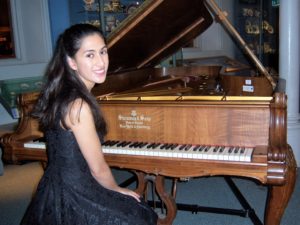
Olivia Sham : Review of concert Tuesday 11th October 2011

Sunderland Pianoforte Society continued its 2011-2012 season with a brilliant set of performances given by Olivia Sham young pianist from Australia, who is at present based in London working at the Royal Academy of Music on her Doctorate.

This recital was sponsored by the “Philip and Dorothy Green Awards for Young Concert Artists” administered by “Making Music” (The National Federation of Music Societies). Since the subject of Olivia’s Doctorate is the study and performance of the work of Franz Liszt, she is a specialist in the interpretation of the music of that great Hungarian virtuoso of the nineteenth century. As a tribute to him in his bicentennial year Olivia played the
whole of his “L’ Années de Pèlerinage” ( Years of Pilgrimage – Book II – Italy). She did
this in two parts – to open and close the concert. She included in the first half of her
programme Beethoven’s lovely “Andante Favori” and (Australian) Carl Vine’s Piano
Sonata No.1. The first of his three so far (He was born in 1954).

Needless to say, the Liszt was all beautifully performed and certainly demonstrated Olivia
Sham’s astonishing and powerful technical brilliance. She gave a high stature to the Beethoven, such as made us realise why Beethoven considered it as the slow movement for
his Op.,53 “Waldstein Sonata” (Before finally rejecting it on grounds of length).

The Carl Vine Sonata (in two movements) was a fantastic piece of piano writing in
which he makes heroic demands on the pianist and creates on the keyboard an amazing
range of sounds and textures, with rhythmic complexities that were impressive simply to
hear let alone to play.

Olivia’s second half opened with No.11 of Messiaen’s “Vingt regards” and then two
Debussy Preludes before the final Liszt. All was beautifully done with finger dexterity
a special feature combined with thoughtful interpretation. She chose appropriate tempi for
all the pieces in the different styles and showed a tremendously wide dynamic range.

Olivia is a strong-willed individual with decidely “set” ideas – so much so that this could
become a stumbling block in her performing career. She seems to disapprove of applause
and certainly does not believe in “encores”. She aimed to play the whole programme as
a continuous essay in sound, interrupted only by the Interval. She generously supplied her own (Copyright) programme notes, which were again a continuous essay. Olivia does not seem to take her audience into account, except in so far as she gives them the finest performances possible. She actually said “Applause is not necessary”. I am afraid this will simply not do! Audiences must be given help in knowing exactly where they are at any one time. It is not a satisfactory approach to drift from one piece to another (by an entirely different composer) without even taking your hands off the keyboard. This is the way she joined together the Messiaen and the Debussy.

It is quite inappropriate to refuse to make pauses for applause between the works of  different composers. In any case, an audience must be given the chance to show its  appreciation of fine performances. This does not in any way interrupt the flow of a recital and it helps the audience to be involved in an active way. Absolutely brilliant she may be, but Olivia must learn (probably from bitter future experience) that she must take her audiences into account if she is really to reach the top in her performing career.

Laurie Giles.

Olivia Sham : More musical magic from Oz – Tuesday 11th October 2011

Australia is fast building a fine reputation in the world of classical music.  We have had numerous examples of pianists of outstanding quality who have given us exciting and enterprising concerts here in the North East.  Now Sunderland Pianoforte Society continues it’s new season with another representative of Australian musical brilliance : Olivia Sham.  Superb quality is assured because Olivia is sponsored by the “Philip and Dorothy Green Awards for Young Concert Artists” administered by “Making Music” (The National Federation Of Music Societies).  Olivia already has a B.Mus Degree from Sydney University and a Masters Degree from London’s Royal Academy, and is now working there on her Doctorate.

With a programme bringing music by Beethoven, Debusy, Carl Vine, Messiaen and a special tribute to Liszt, this is a recital not to be missed.   Not just a pretty face and clever young fingers; Olivia really knows what she’s talking about!

Date:- Tuesday 11th October 2011
Time: – 7.15p.m.
Venue:- Sunderland Pottery Room(Ground floor)
Museum & Winter Gardens, Burdon Road, Sunderland.
Tickets: at the door £11 (Students /OB40’s £5)  No other concessions.
Accompanied  Children (up to 16 years) come free (with teachers or parents)

Szczepan Konczal : Review of concert Tuesday 13th September 2011

Sunderland Pianoforte Society opened its new 2011-2012 season with something
very special.  A young Polish pianist, who, at the age of 26, has already won high prizes
and awards ion more than twenty international level piano competitions, including
the famous “Chopin Competition” in Poland. He is regarded as a specialist (already!!)
in the works of his fellow countryman:Chopin. He built the whole of his second
half of his recital from the famous Pole’s works. His First Scherzo Op.20 was given
a simply amazing performance, full of fire and drama and with incredible finger
dexterity. Yet the “dreamy” central section (based on a Polish Christmas Carol) was
full of beautiful legato smoothness under perfect control before the furious return
to the opening. Completely at home with the Four Mazurkas Op.24 these turned
out to be lyrical and harmonic revelations to anyone who was not familiar with
them. They were simply gorgeously done and the audience loved every minute.

Then came one of Chopin’s brilliant showpieces: the Andante Spianato and Grand
Polonaise Op.22. Chopin did not often indulge in writing “Lisztian” pieces of this
kind but, as a young man, Chopin had to give himself (and everyone else!) a supreme
challenge to make his mark in that early 19th. world where piano showmanship was
the fashion and expected by audiences and shortly after Liszt had recently invented
the “Solo Piano Recital” as a new concertising format. This Polonaise certainly
makes heroic challenges upon any young virtuoso daring to tackle it in public.
Szczepan simple took it in his stride and played it quite magnificently producing
three “curtain calls” as the audience applauded with great enthusiasm.

The first part of his programme consisted of two sonatas: one by Haydn
(No.40) and one by Beethoven Op.10 No.3. Contrasting works by their very
natures, they required quite different approaches. Szczepan demonstrated his
versatility and musical understanding by showing us delicate classical finger skills
with crisp clarity as required by the Haydn with skilfully chosen tempi and
dynamics. He gave the Beethoven full power and creating deep drama bringing a
stature to this rather neglected Beethoven masterpiece that perhaps we had
forgotten. Everyone in the audience was stunned by his Chopin, astonished by his
powerful Beethoven interpretation, and quite delighted by the delicate intricacies of
the Haydn.

The Sunderland Society invited representatives of the Polish Community to
this special concert with a full Polish flavour at a special group ticket price, and
they came and enjoyed being proud of their brilliant young musician direct from
their homeland. The whole evening was a great success. A grand start to the new
season- especially when a number of audience members said: “Please invite that
brilliant young man to come back to play for us again!” ‘Nuff said!!

Laurie Giles.

Viv. McLean : Review of concert Tuesday 17th May 2011

Sunderland  Pianoforte  Society  took  the  unusual  step  of  holding  a  piano recital  in May (17th.), made  necessary  by  the  postponement  of  Viv  McLean’s  planned  recital  in  December  2010  due  to  extreme  weather  conditions  across  the  North East.
Viv  had  agreed  to  postpone  exactly  the  same  programme  until  that  new  date.
Everyone was  looking  forward  to  Viv’s  programme  partly  because  a  number  of  the  items  had  been  requested  by  members  and  friends  of  the  Society.

The  delay  from  December to May  was  well  worth  it!   Everyone  in  the  hall, which  was  comfortably full,  enjoyed  a  wonderful  evening.  One  of  the  requests  opened  the  recital – Liszt’s  six  “Consolations”-  with  Viv  in  his  subtlest Romantic  mode.  A  wonderful  performance  of  a  well-loved  set  that produced  the  warmest  applause  from  a  deeply  appreciative  audience.
Viv  then  gave  us  an  absolutely  stunning  performance  of  Beethoven’s  Sonata Op.31 No. 2 “The  Tempest”. The  international  music  press  have  referred  to  Viv  as  playing”fire”  at  the  keyboard.  This  was  certainly  true  of  his  Beethoven  where  he  captured  the  very  varied  characters of  the  three  movements with  total clarity  and  brilliance.   Every  nuance  of  tempo  and  dynamic  was  given  to  us  with  Viv’s  carefully  thought  out  phrasing  and  flowing  melody  lines.  It  is  quite  a  number  of  years  since  the  Sunderland  Society  has  enjoyed  this  great  Beethoven  Sonata  and  this  McLean  interpretation  was  a  really  satisfying  musical  feast.   Although  only  the  interval  break,  Viv  was  called  back  by  the  applause  for  two  “curtain calls”.

Viv’s  second  half  began  with  a tribute  to  Chopin:  the single (often  not  played) Prelude in C#minor Op.45, the  rarely  heard  posthumous  Nocturne  in the same key, and  then  the  great  Ballade No.1 in G minor  Op.23.  Viv  has  a  very  special  way  with  Chopin: Romantic,- true, but  giving  him  the  great  stature   that  his  writing  deserves.  Much  emphasis  on  the  clarity  of  inner  detail  and  on  Chopin’s  frequent  use  of  melodies  running  alongside  main  lines.   In  some  clever  way  Viv  was  able  to  bring  to  the  fore  Chopin’s  deeply  experimental  harmonies  and  use  of  the  pedals. When  it  came  to  the  Ballade,  the  audience  was  gripped  by  the  sheer  power  that  Viv  gave  to  this  true  masterpiece  of  piano  writing.   Completed  when  Chopin  had  settled  in Paris  in  1835  and  was  approaching  the  height  of  his  creative  powers,  this  G  minor  Ballade  is  a  virtuoso  challenge  from  the  points  of  view  of  requiring  tremendous finger  dexterity   as  well  as  the  interpretive  skills  of  an  experienced  and  deeply  musical  personality.   Viv  simply  astonished  and  delighted  his  audience.

He continued  with  a  contrast: two  quite  unknown  and  literally  never  played  pieces  by  the  Russian,  Vasily  Kalinnikov,  who  died  in 1901  a  few  days  before  his  35th. birthday.  A  tragic  figure  but  a gifted  composer  who  left  us  too  little  to  appreciate  his  greatness.  Viv  gave  us  his  “Elegy”  and  his  “Nocturne in F# minor”.  The audience  was  completely  captivated  by  this  late-nineteenth  century  Romanticism which  was  at  once  a  comfortable   and   familiar  idiom  but  at  the  same  time  fresh  and  completely  original.  Viv  presented  to  us  a  musical  mind  of  great  fascination  that  most  people  wanted  to  know  more  about.  Two  unusual  piece  to  include,but  both  highly  successful  and  so  beautifully  handled  that  the  audience  loved  and  hung  on  to  every  note.

The  “grand  finale”  of  this  successful  evening,  taking  it  to  even  greater  heights  of  virtuosity,  was  Gershwin’s  “Rhapsody  in  Blue”  in   a  piano  solo  version  for  which  Viv  has   become  deservedly  famous.    There  simply  has  to  be  a  lot  going  on  at  finger  level  when  a  pianist  is  re-creating  a  piece  like  this  which had  been  originally  scored  for  solo (concertante)  piano and  the  Paul  Whiteman  Jazz  Orchestra.  At  times  it  sounded  as  though  there  were  two  pianists  at  the  keyboard.  Viv’s  lively  and  witty  version  of  all  of  those  Gershwin  tricks  and  trademarks  was  just  totally  magnificent  and  the  audience  loved it!    They  simply  kept  on  clapping!!

In  his  usual  generous  way,  Viv  gave  two  encores:  that  beautiful,  slow  A minor  Mazurka  by  Chopin  with  all  of  its  tricky  filigree  melodic  decorations  done
with  Viv’s  delicately  light  touch, and  then  his  own  gorgeous  and  dreamy  arrangement  of  Harold  Arlen’s  famous  song (that  nearly  did  not  get  into  the  filming  of  “The  Wizard of Oz”) “Somewhere,  over  the  rainbow”.
These  proved  to  be  two  pieces  that  calmed  the  evening  after  all  the  virtuosic excitements  and  heroic  fireworks, and  again  Viv  had  the  audience  “eating  out  of  his  hands”.
They  all  went  home  smiling   and  singing.   A  good  night  was  had  by  all.  Perhaps could  be  summed  up   affectionately  by  the  old   saying:“Something old, something  new, something borrowed  and  something  Blue”.  A  grand  finish  to  a  successful  season  for  the  Sunderland  Pianoforte  Society.

Viv McLean : Return of an old friend – Tuesday 17th May 2011

Viv McleanSunderland Pianoforte  Society  is  proud  to  be  able  to  boast  that (after almost 70 years  of  promoting concerts)  it  has  many  friends  among  the  leading  virtuoso  pianists  of  the  world.  Some  are  so  famous  that  their  names  have  become  household words  in  their  own  countries.   Among  these  is  a  particular  friend  who  has  played  many  times  in  Sunderland  since  his  student  days  and  who  always  enjoys  coming  back: Viv  McLean.   He  is returning  to  build  a  May  programme  of  music  by  Beethoven, Liszt, Chopin, Kalinnikov  and  Gershwin (Rhapsody in Blue), many  items  of  which  are  audience  requests.

Viv  went to  Chetham’s  School  of  Music (Manchester) and  then  to  the  Royal Academy  in  London.  He  has won  major  competition  prizes  and  sponsorship  awards.  He  has  performed  in  all  the  major  venues  in the  U.K., France, Spain, Germany, Poland, Sweden, Finland, Malta, Israel, Cyprus, Japan, Australia  and  the  U.S.A.   Apart from  his  solo  recital  work  he  has  done  a  great  number  of  Concerto  soloist  performances  with  great  orchestras  and  conductors  around  the  world.   Viv regards  music  as  an  intensely  collaborative  and  communication  medium  and  so loves  to  combine  with  other  fine  musicians  in  Chamber  Music.

Sunderland is proud to present this great  artist.

Alesandro Taverna : Review of concert Tuesday 12th April 2011

Alesandro Taverna  is  a  virtuoso  pianist  from  Italy  where  he  still  lives  and  teaches.
His  programme  of  works  by Beethoven, Chopin, Rachmaninov, Stravinsky  and  Friedrich Gulda  was  an  extremely  challenging  one  for  any  young  pianist  and  constitued a  very  “physically  demanding” set  of  pieces.

He  began  with  Beethoven’s   “Eroica” Variations  Op.35.  This  is  an  important  masterwork  from  the  pen  of  the  great  German  from Bonn.  Alesandro’s  performance  reminded us  of  the  massive  stature  of  the  work and  the  audience  was  mightily  pleased.

The  Chopin  pieces  were  those  two  lovely  Nocturnes of  Op.62.  Not  too  frequently  played  at  concerts, and  Taverna  completely  changed  his  style  and  approach  for  these  delicate  masterpieces.  Absolutely  ravishing  and  the  audience  clearly  loved  every  bar  of  Alesandro’s  convincing  interpretation, handling Chopin’s  intricate  melodic  decorations with style  and  perfectly  controlled  delicacy.

The  Rachmaninov  piece  was  that  lovely  little  separate  Polka  that  he  wrote  for  and  sent  to  his  father  labelling  it  with  “dad’s”  initials:  “Polka de V.R.”  Another   wonderful  performance  that  appropriately  led  us  into  the  interval.

The  audience  especially  enjoyed  Liszt’s  amazing  reconstruction  for  piano  of  Rossini’s  famous  overture to “William  Tell”.  This  opened  Alesandro’s  second  half  and  set  the  scene  for  piano  fireworks  throughout  this  section.  The  demands  that  Liszt  makes  in  this  Rossini  simply  have  to  be  witnessed  to  be  believed.  If  you  were  listening  to  a  CD  recording  you  would  swear  that  there  were  two  clever  pianists  at  work.  The  result  was  highly  entertaining  and  certainly  an  “audience  winner”  with  all  those  lovely  tunes  and  the  exciting  final  gallop  that  everyone  knows  so  well.

This  was  followed  by  an  equally  stunning  set  of  reductions for  piano  of  orchestral  scores.  This  time  Stravinsky  himself  produced  piano  versions of  three  tableaux  from  his  own ballet  “Petrushka” for  his  friend  Artur  Rubinstein  back  in  1921.  This  is  a  simply  colossal  task  taken  on  brilliantly  to  produce  the  sonorous  effects  of  Stravinsky’s  full  orchestral  colours   for  a  single  piano.  This, too, is  a  very  demanding  collection  and  the  pianist  has  to  know  the  orchestral  score  in  his  mind  to  make  sense  of  all  the  things  that  are  happening  in  this  piano  transcription.    Alesandro  Taverna  succeeded  magnificently  with  his  flawless  technique.   The  audience, which  was  the  largest  the  Society  had  had  all  season, was  gripped  by  the  sheer  poetry  and  total  excitement  of  Taverna’s  performance.  The  recital  ended  with  two  of  Friedrich  Gulda’s  “Jazz Pieces”.

This  was  a  man  who  had  three  distinct  careers: as  a world  famous  interpreter of  all  the  great  classical  masterpieces ,including  concertos: as  a  composer  in  his  own  right  of  hundreds of pieces; and  finally  as  a  Jazz  Pianist  who  had  an  amazing  technique and  was  astonishing  when  it  came  to  that  basic  requirement  of  the  Jazz World – improvisation.  These  two  pieces  were  like  virtuoso  show pieces  in  their  own  style – and  thus  furiously difficult  both  rhythmically  and  with  so  many  notes  and  octaves  flying  all  around  the  keyboard.  This  brought  the  audience  to  its  feet with  cheers  and  a  number  of  “curtain calls”.  Alesandro  Taverna  responded with  a  complete  Chopin  “Valse  Brillante” that  everyone  loved   and  which was  played  with  satisfying  clarity  and  panache  at  quite  a  crisp  and  effective  speed.  A  wonderful  evening  of  the  finest  quality  music  making.

Alessandro Taverna : A virtuoso pianist who is also an Engineer! – Tuesday 12th April 2011

Photo by : Pierluigi Marchesan

The  brilliant  young  Italian, Alessandro Taverna  from  Caorle(just North-East of Venice) is coming to Sunderland  for  the very first time.  He  left  his  High School  with  a Diploma in Science with Honours and  he  joined the Faculty of Mechanical Engineering at the University of  Padua.  This  was  before  he  discovered  his  life-long love  of  the  piano  and  its  music.

He  is  a  serious-minded  young  man  who  continues  to  learn  and  to  be  taught by selected experts, continuing as late as  2009.  Perfection  is  his  aim.  He  has  won many  important  prizes  in  prestigious  Piano Competitions  around  the  world  over  the  past  ten  years. He  teaches  piano  at  his  old “alma mater” the  Foundation  of  St.Cecilia  at  Portogruaro.  He  has  played  concertos  and  given   solo  recitals  all  around  Europe  and  has  been  specially  chosen  by  prestigious  musical  organisations  to  give  concert  series  in Japan, Canada  and  the  United States.  He  has  played  for  Italian  and  Slovenian  Radio and Television,  and  music  critics  around  the  world  have written  with  great  enthusiasm  about  the  wonders of  his  performances. He will  enjoy  playing  the  famously unique Steinway Concert  Grand  at Sunderland   in  a  fascinating  programme  of  Beethoven, Chopin, Rachmaninoff, Rossini  (arranged  Liszt)   and  Stravinsky.   Something special to look  forward to!!

Viv McLean, return of an old friend – 7th December 2010

POSTPONED! Please note this recital has been postponed until 17th May 2011 (due to weather conditions) – same programme, same venue.

Viv Mclean Some are so famous that their names have become household words in their own countries. Among these is a particular friend who has played many times in Sunderland since his student days and who always enjoys coming back: Viv McLean.

He is returning to build a December programme of music by Beethoven, Liszt, Chopin, Kalinnikov and Gershwin, many items of which are audience requests.

Viv went to Chetham’s School of Music (Manchester) and then to the Royal Academy in London. He has won major competition prizes and sponsorship awards. He has performed in all the major venues in the U.K., France, Spain, Germany, Poland, Sweden, Finland, Malta, Israel, Cyprus, Japan, Australia and the U.S.A. Apart from his solo recital work he has done a great number of Concerto soloist performances with great orchestras and conductors around the world. Viv regards music as an intensely collaborative and communication medium and so loves to combine with other fine musicians in Chamber Music.

Sunderland is proud to present this great artist.

The pianist Viv McLean seemed exceptional to me; he astonished us with his musical maturity and extraordinary sonority.
Le Monde (Paris)

At the Festival de Melle, Viv McLean revealed extraordinary originality, superb simplicity, and fingers of steel hidden behind muscles of velvet. He is an otherworldly young man – he plays with the genius one finds in those who know how to forget themselves, naturally placing themselves at the right point to meet the music, this mystery of the moment.
Le Monde (Paris)

The pianist Viv McLean never faltered, spewing molten lava.
The Times (London)

The fluent technique and brilliance of the interpreter were impressive, he played with insight and the greatest sensitivity.
General Anzeiger (Bonn)

The listener was struck by the sustained level of technical mastery. Viv McLean performed with his mind as well as his hands.
Malta Sunday Times

Néstor Bayona Pifarré recital goes down a treat

Image of NéstorNéstor Bayona Pifarré performed an exciting programme on Tuesday night.

It turned out to be a brief history of keyboard music from J.S. Bach all the way through to the 21st Century.

His Shostakovich and Bach preludes and fugues were the epitome of contrapuntal clarity, with all inner parts beautifully articulated.

The Hydn variations in F minor, were given their proper status as an impressive piano piece in his interpretation.

His tribute to Chopin on the 200th Anniversary of his birth, was a really fine performance of the Scherzo no3. in C# Minor Op. 39.  This was a monumental performance, and he has the technique to really revel in this extremely difficult piece.

His version of the romantic Beethoven Sonata no. 27 Op. 90 was again impressive and very welcome since this sonata is neglected by concert pianists and has not been played at the society for some thirty years.  The Sunderland audience really enjoyed it.

The more modern pieces filled the 2nd half of his recital.  The Mompou “Song and dance” No. 6 was a delight, in which the audience enjoyed the vivid Spanish rhythms.

The Albeniz Evocacion and the Granados El Fandango del Candil were both old, familiar favourites and interpreted in a vivacious and deeply romantic style.

Cristobal Halffter’s most recent piece was frankly a shock to the system, modern, dissonant and virtuosic.  Some of the audience did not enjoy this repetitive modernism.

Over all, a very good and satisfying survey of  keyboard music from the early 18th to the early 21st century.  Exceedingly well presented, Néstor frequently communicated verbally with his audience, and certainly grabbed their full attention.